
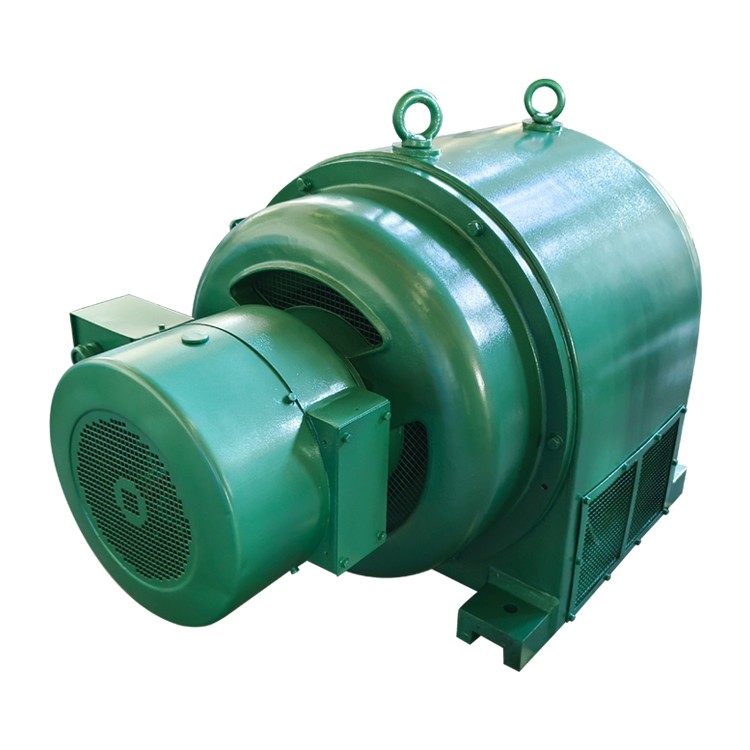
Product introduction
The JR series wound-rotor three-phase motors have high starting torque and low starting current, with a smooth start via external rotor resistance. They suit ball mills, crushers, compressors and other high-inertia, hard-start loads.
The wound rotor with slip rings and brushes starts with external resistance and provides speed control, giving controlled starting current and less grid shock; a robust stator and rotor with an air-cooled build run reliably continuously.
Typical applications: ball mills, crushers, compressors and mill auxiliaries.
Selection tip: work out the starting torque and current, configure the starting resistance and cabinet, and confirm the duty and cooling.
FAQ: Why a wound rotor? For high starting torque and controlled starting current; do the slip rings need maintenance? Yes, check brush wear and the slip-ring surface regularly.
Construction and performance: a wound rotor with slip rings and brushes, external rotor resistance for starting and speed control, a robust laminated stator and rotor and a well-cooled air build give high starting torque and controlled starting current for heavy starting.
More applications and answers: a wound-rotor motor suits ball mills, crushers and other high-inertia loads; on selection, work out the starting torque and match the starting cabinet resistance. FAQ: Slip-ring and brush life? Replace by wear and use; can it be frequency-controlled? Generally no, it uses rotor resistance, so for precise control choose a VFD.
More applications and maintenance: a wound-rotor motor for mills and crushers starts with stage-removed rotor resistance, so plan the starting cabinet and check the starting current and temperature rise; inspect the slip rings and brush wear and clean carbon dust regularly to prevent flashover. The factory can supply a double shaft, pole change or special-voltage version on request.
FAQ: Can a wound-rotor motor start at full load? Yes, but the starting current is large, so use external rotor resistance to limit it; is it less efficient than a squirrel cage? The wound rotor has copper and brush losses, so it is slightly less efficient in continuous running, but much better at starting.
Core Advantages
- Wound-rotor three-phase asynchronous motor
- High starting torque with reduced starting current
- Suitable for heavy-duty starting
JR Series Wound Rotor Motor
JR series wound-rotor three-phase asynchronous motors with high starting torque.
Basic parameters
| Rated power | 280 kW |
|---|---|
| Rated voltage | 380V |
| Rated speed | 1000 r/min |
| Protection (IP) | IP23 |
Related series
Other series under Asynchronous Motor for easy comparison.
Need help selecting? Contact us for a selection & quotation.